

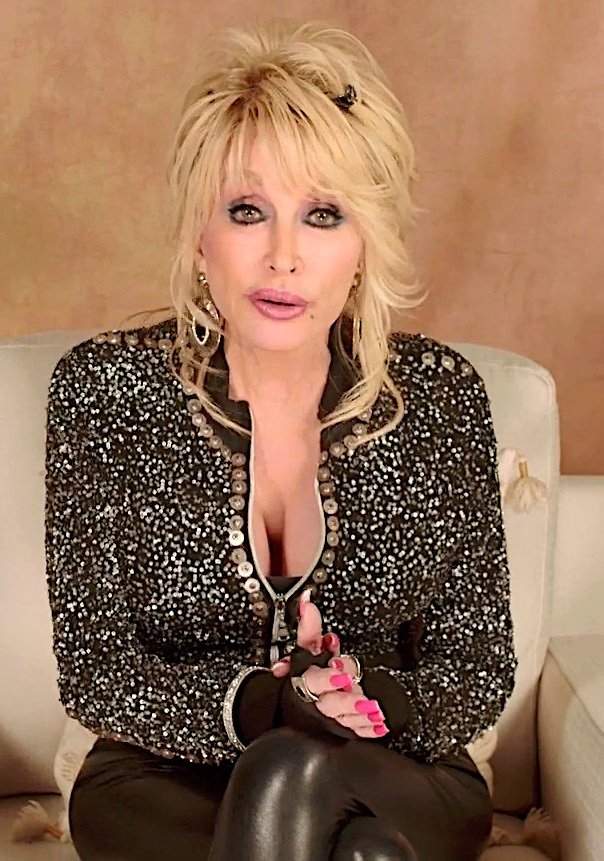
In loving memory
Dolly Parton
January 19, 1946 — August 25, 2026
A voice as big as her heart, and a heart as big as the mountains that raised her. This is the story of a coal miner’s daughter who became one of the most beloved entertainers the world has ever known.
A Coat of Many Colors
Dolly Rebecca Parton was born January 19, 1946, in a one-room cabin in the Great Smoky Mountains — the fourth of twelve children raised by Avie Lee and Robert Lee Parton. There was little money, but there was music everywhere: in church, on the porch, in the hollers between the hills.
Dolly began writing songs before she could write in cursive, singing on local radio and TV in East Tennessee by the time she was ten. One of her most cherished true stories became a song: her mother stitched her a coat from scraps of fabric, telling Dolly the story of Joseph’s coat of many colors as she sewed. Dolly wore it proudly to school — and turned the memory into one of the most tender songs of her career, “Coat of Many Colors.”
Nashville & the Grand Ole Opry
At just thirteen, Dolly made her Grand Ole Opry debut — and, the story goes, was such a hit the crowd wouldn’t let her off stage until she sang a second song, breaking Opry protocol on the spot. It was proof of what everyone in her orbit already suspected: this girl was a star waiting for a stage big enough to hold her.
The day after graduating high school in 1964, Dolly boarded a bus for Nashville with a suitcase and a plan. She later joked she was “too busy to be scared.” Within a few years she’d landed a songwriting deal and her first charting single, laying the groundwork for everything to come.
The Porter Wagoner Years
In 1967, country star Porter Wagoner invited Dolly to become the “girl singer” on his popular syndicated TV show. For seven years they were one of country music’s most successful duos — chart-topping duets, a devoted national audience, matching rhinestone glamour. Wagoner became her mentor, even gifting her jewelry and a royal blue Cadillac.
But Dolly’s ambitions had outgrown the arrangement, and by the early 1970s the partnership had turned tense. She’d agreed to stay five years; she stayed seven, and Porter still wasn’t ready to let her go. Rather than argue further, Dolly went home and wrote him a song instead.
Going Solo — and Crossing Over
Free to chart her own course, Dolly’s career exploded. “Jolene” became an instant standard. By the late ’70s she was crossing from country into the pop mainstream with “Here You Come Again,” proving her voice — and her songwriting — had no ceiling.
Over her career she notched 25 No. 1 country singles, a record among female artists, and a staggering 44 top-10 country albums — more than any artist, in any genre. She’s written more than 3,000 songs. Few entertainers in history have matched that combination of volume and heart.
9 to 5 and the Silver Screen
Dolly stormed Hollywood in 1980 opposite Jane Fonda and Lily Tomlin in “9 to 5,” a comedy about three overworked, underpaid office women that became a cultural phenomenon. Dolly wrote the title track on set, tapping out the rhythm on her acrylic nails — it shot to No. 1 and earned her Grammy and Oscar nominations.
More films followed — “The Best Little Whorehouse in Texas,” “Rhinestone,” and the beloved ensemble drama “Steel Magnolias” (1989), where her warmth on screen matched the one audiences already knew from her music.
SONGS OF THIS CHAPTER
Dollywood, and a Legacy of Giving
In 1986, Dolly turned a small Tennessee amusement park into Dollywood — a love letter to the mountains that raised her, built to bring jobs and joy back to her home region. It remains one of the most visited theme parks in America.
Her generosity reached far beyond the park gates. In 1995, she founded the Imagination Library, mailing free books to children each month — a program that has since distributed more than 300 million books worldwide. In 2020, she quietly donated $1 million to COVID-19 vaccine research at Vanderbilt University, later joking she just wanted to “put my money where my mouth is.”
HONORS ALONG THE WAY
“I’m not going to limit myself just because people won’t accept the fact that I can do something else.”
Dolly Parton passed away on August 25, 2026, at the age of 80, surrounded by the family she cherished above all else. She leaves behind a body of work — and a body of kindness — that will outlast every one of us. From a one-room cabin in the Smokies to stages across the world, she never stopped being exactly who she was, and she never stopped giving back.
“I ain’t got time to get old.” — Dolly, always.
Leave a Reply